
Featured Snippet: Who Was Timothy in the Bible?
Timothy was a young Christian leader from Lystra who became one of the apostle Paul’s closest ministry companions. His mother, Eunice, was a Jewish believer, while his father was Greek. Timothy learned the Scriptures from childhood, traveled with Paul, served churches, and later received two New Testament letters that bear his name. His life demonstrates how faith, Scripture, humility, courage, and faithful mentorship can shape a person for meaningful Christian service.
Key Takeaways About Timothy
- Timothy was from Lystra and had a Jewish-believing mother and a Greek father.
- His mother was Eunice, and his grandmother was Lois.
- He had already developed a good reputation among believers before joining Paul.
- Paul regarded Timothy as a trusted coworker and a genuine spiritual son.
- Timothy traveled with Paul and served believers in several important churches.
- He was entrusted with difficult pastoral responsibilities, particularly in Ephesus.
- Paul encouraged him to remain faithful despite his youth, opposition, and personal weaknesses.
- Timothy’s life shows that Christian leadership is built through character, Scripture, faithfulness, and service rather than status.
- The two letters to Timothy emphasize sound teaching, godly character, church leadership, perseverance, and faithful transmission of the gospel.
Timothy’s Story Begins in Lystra

Timothy first appears by name in Acts 16:1–3, when Paul came to Derbe and Lystra during his second missionary journey. Luke describes him as a disciple whose mother was a Jewish believer and whose father was Greek. Believers in Lystra and Iconium spoke well of him, and Paul wanted Timothy to accompany him.
This introduction is significant because Timothy was not presented as an impressive public figure. Instead, Scripture first highlights his character and reputation.
That principle remains important for Christian life today. Before Timothy became a ministry leader, he was already known among believers as someone whose life reflected genuine faith.
Acts 16:1–3 — Timothy Joins Paul
The passage says that Timothy was a disciple and that the believers spoke well of him. Paul then invited him to participate in missionary work.
The historical context matters. Paul was beginning another major missionary journey, and Timothy became part of a ministry team that would eventually carry the gospel into different regions.
Lesson: Faithful ministry often begins with ordinary credibility—being known as trustworthy, teachable, and committed before receiving a larger responsibility.
Acts 16:4–5—Strengthening the Churches
Paul and his companions delivered the decisions of the Jerusalem apostles and elders to the churches. As a result, the churches were strengthened in faith and increased in number.
Timothy therefore entered ministry in a setting where doctrine, church unity, evangelism, and spiritual growth were closely connected.
Life application: Christian service is not merely about personal achievement. Its purpose is to strengthen other believers and help the church remain faithful to Christ.
Read also this blog post : Click Now
Timothy’s Family Gave Him a Foundation of Faith

One of the most beautiful aspects of Timothy’s story is the influence of his family.
Paul later wrote that Timothy possessed a sincere faith that had first lived in his grandmother Lois and his mother Eunice. 2 Timothy 1:5 connects Timothy’s faith with this family heritage.
His family background was culturally complex. Acts identifies his mother as Jewish and his father as Greek. Scripture does not provide us extensive information about his father, but it clearly emphasizes the spiritual influence of his mother and grandmother.
2 Timothy 1:5—A Faith Passed Down
Paul reminds Timothy of the “sincere faith” that first lived in Lois and Eunice.
This does not mean Timothy inherited salvation genetically. Rather, his family modeled and taught a faith that Timothy personally embraced.
Theological lesson: Christian faith can be faithfully modeled from one generation to another, but every person must respond to God personally.
2 Timothy 3:14–15 — Scripture From Childhood
Paul tells Timothy to continue in what he had learned and notes that he had known the sacred Scriptures from childhood.
Those Scriptures had taught him about God’s truth and had prepared him to understand salvation through faith in Christ.
Life lesson: Early biblical instruction can provide a deep spiritual foundation that continues to guide a person throughout adulthood.
For parents, grandparents, teachers, and church leaders, Timothy is therefore a powerful reminder that spiritual formation often happens gradually through years of faithful teaching.
Why Was Timothy Circumcised?
One of the more frequently misunderstood details about Timothy occurs in Acts 16:3.
Paul had Timothy circumcised because of the Jews living in that region who knew that Timothy’s father was Greek.
At first glance, this can appear confusing because Paul strongly defended the truth that Gentile believers did not need circumcision as a requirement for salvation.
The key distinction is salvation versus ministry accommodation.
Timothy was not circumcised so that he could become saved. Rather, Paul made a cultural decision that would remove an unnecessary obstacle to ministry among Jews.
Galatians 2:3—Titus Provides an Important Contrast
Paul did not allow Titus, a Gentile, to be compelled into circumcision as a condition of Christian freedom.
This helps explain the difference. The gospel did not require circumcision for justification. Timothy’s situation involved missionary sensitivity in a Jewish setting.
Practical lesson: Christian freedom should not become an excuse for unnecessary offense. At the same time, cultural accommodation must never replace the truth of the gospel.
Paul Saw Timothy as More Than a Coworker
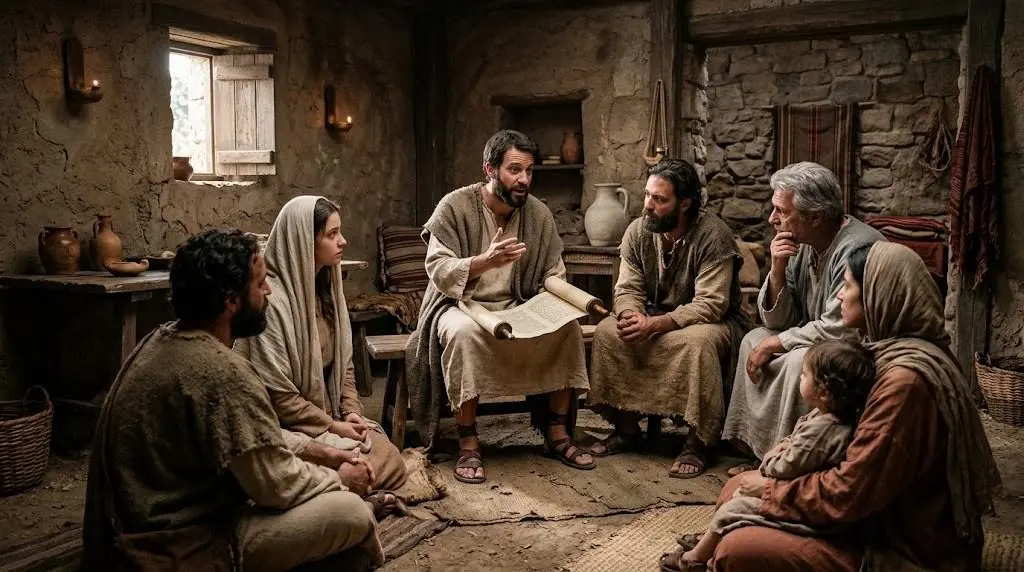
Timothy developed an unusually close relationship with Paul.
Paul called him his “true son in the faith” in 1 Timothy 1:2 and described him affectionately in other passages as well. This language reflects deep spiritual trust and mentorship.
Timothy was not simply someone who happened to travel with Paul. Over time, he became a trusted representative of Paul’s ministry.
Philippians 2:20–22—Timothy’s Proven Character
Paul says he had no one else like Timothy who would genuinely care about the Philippians’ welfare.
He then explains that Timothy had served with him in the gospel like a son serving with his father.
That is a remarkable testimony.
Paul’s confidence in Timothy was based not merely on talent but on proven character.
Life lesson: Spiritual maturity becomes visible through consistent concern for other people, not merely through knowledge or public ability.
1 Corinthians 4:17—Timothy as a Faithful Reminder
Paul sent Timothy to remind the Corinthian believers of Paul’s ways in Christ.
Timothy, therefore, served as a trustworthy carrier of apostolic teaching.
His role demonstrates the importance of faithful transmission. Christian ministry is not about inventing a new message but faithfully communicating the gospel received from Christ and the apostles.
Timothy Served in Difficult Places
Timothy’s ministry was not always easy.
Paul sent him into situations involving spiritual confusion, opposition, pastoral challenges, and immature believers. Timothy therefore provides an important biblical picture of Christian service: ministry can be deeply meaningful while still being demanding.
1 Thessalonians 3:1–3 — Strengthening Troubled Believers
Paul sent Timothy to strengthen and encourage the Thessalonians concerning their faith.
The believers were experiencing affliction, and Timothy’s assignment was not simply to deliver information. He was to help them remain spiritually steady.
Application: Mature Christian service often means entering difficult circumstances to strengthen people who are discouraged.
1 Corinthians 16:10–11—Timothy Was Not to Be Intimidated
Paul instructed the Corinthians to make sure Timothy had nothing to fear among them and urged believers to send him on his way in peace.
This suggests that Timothy may have been vulnerable to intimidation.
Yet Paul did not treat that possibility as a reason to abandon ministry. Instead, he encouraged the church to support him.
Lesson: Being naturally quiet, young, or cautious does not disqualify someone from useful service to God.
Read also this blog post : Click Now
“Let No One Despise Your Youth”
Perhaps the most recognizable passage associated with Timothy is 1 Timothy 4:12.
Paul tells him not to let anyone despise his youth but to become an example to believers in speech, conduct, love, faith, and purity.
This instruction is deeper than simply saying, “Be confident.”
Paul does not tell Timothy to demand respect because of his position. Instead, he tells him to earn credibility through godly character.
1 Timothy 4:12—Leadership Through Example
Timothy was to demonstrate Christian maturity through:
- Speech
- Conduct
- Love
- Faith
- Purity
The principle is powerful because character can speak louder than age.
Practical application: If people underestimate your experience, respond by becoming more faithful rather than more defensive.
1 Timothy 4:13 — Give Attention to Scripture
Paul also asked Timothy to devote himself to the public reading of Scripture, exhortation, and teaching.
Biblical leadership, therefore, depended upon the Word of God.
Lesson: Christian influence should grow from Scripture rather than personality alone.
Timothy Was Entrusted With Responsibility in Ephesus
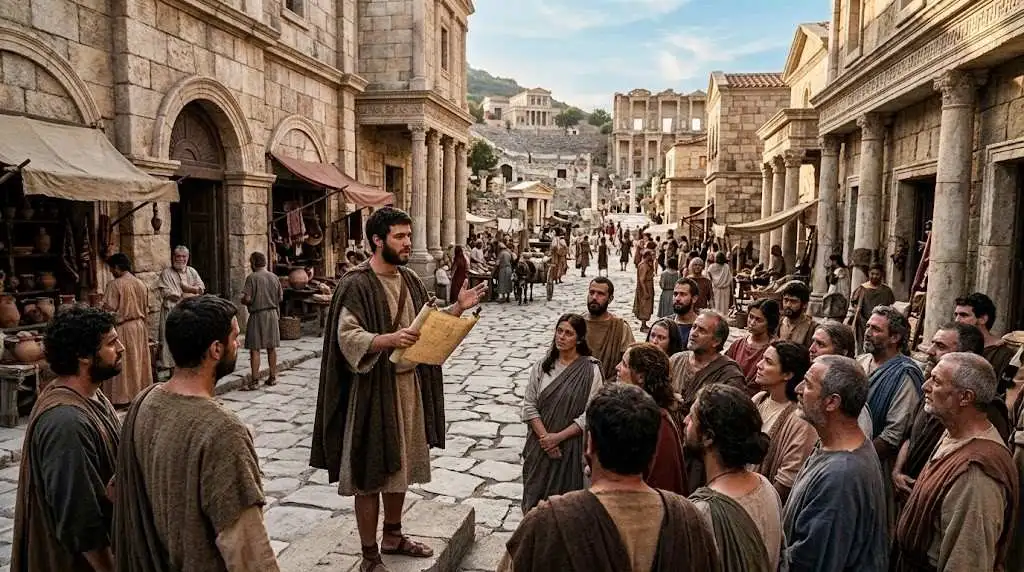
The letters to Timothy reveal that he was given significant responsibility in Ephesus.
Paul instructed him to remain there and address false teaching and disorder. 1 Timothy 1:3–5 shows that Timothy was expected to protect the church from teachings that distracted believers from the central purpose of Christian faith.
1 Timothy 1:3–5 — Truth Should Produce Love
Paul warns Timothy about false teaching, myths, and endless genealogies.
However, his goal was not a theological argument for its own sake.
He says that the goal of the instruction is love flowing from a pure heart, a good conscience, and sincere faith.
That is a crucial biblical principle: sound doctrine should produce transformed living.
Life lesson: Knowing biblical truth should make Christians more loving, sincere, holy, and faithful—not merely more argumentative.
1 Timothy 1:18–19—Fight the Good Fight
Paul reminds Timothy of the prophecies previously made concerning him and urges him to fight the good fight while holding onto faith and a good conscience.
The imagery communicates perseverance.
Timothy needed courage because ministry involved spiritual opposition.
Application: Faithfulness sometimes means continuing to obey God when circumstances make quitting easier.
Timothy’s ministry included teaching and church leadership.
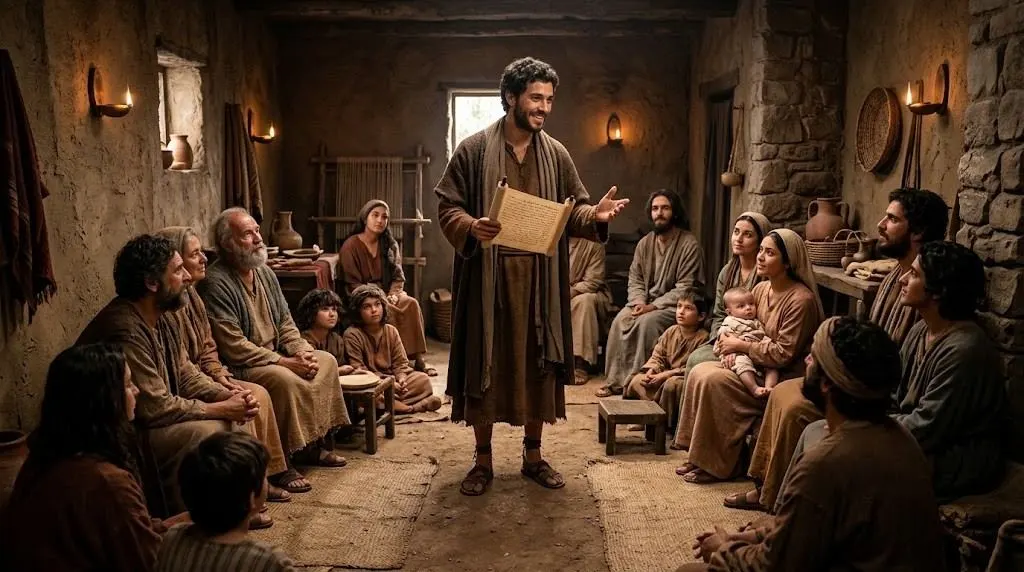
First Timothy contains extensive instructions about Christian leadership.
Paul discusses prayer, worship, overseers, deacons, widows, church conduct, false teachers, wealth, contentment, and personal holiness.
Timothy therefore had to deal with both theological truth and everyday church life.
1 Timothy 3:15—The Church and the Truth
Paul explains that his instructions were intended to help Timothy understand how people ought to conduct themselves in God’s household.
The church is portrayed as a community connected with the living God and the truth.
Lesson: Christian leadership is not merely administrative. It involves protecting a community that belongs to God.
1 Timothy 5:1–2—Treat People as Family
Paul instructed Timothy to treat older men as fathers, younger men as brothers, older women as mothers, and younger women as sisters, with purity.
This gives pastoral ministry a relational dimension.
People are not projects.
Application: Spiritual leadership requires dignity, patience, compassion, boundaries, and genuine care.
Read also this blog post : Click Now
Paul Warned Timothy About Money and Contentment
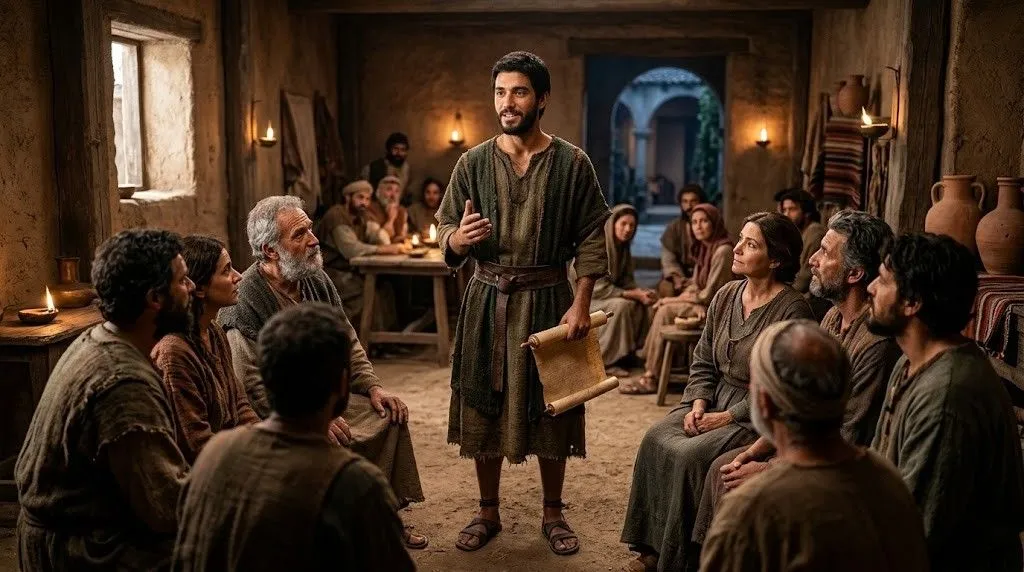
Timothy also received serious instruction about wealth.
1 Timothy 6:6–8—Godliness With Contentment
Paul teaches that godliness with contentment is great gain and emphasizes the basic needs of food and clothing.
The Christian goal is therefore not endless accumulation.
Life lesson: Contentment protects the heart from allowing possessions to become the measure of success.
1 Timothy 6:9–10 — The Danger of Loving Money
Paul warns about those who desire to become rich and explains that the love of money can lead people into temptation and spiritual ruin.
Importantly, the biblical warning is about the love of money, not the mere possession of resources.
Christian stewardship means using what God provides responsibly while refusing to make wealth an idol.
Timothy Was Encouraged to Pursue Godly Character

Paul repeatedly directs Timothy toward active spiritual formation.
1 Timothy 6:11 — Flee and Pursue
Timothy is told to flee destructive desires and pursue righteousness, godliness, faith, love, endurance, and gentleness.
Notice the two movements:
Flee: what corrupts the soul.
Pursue: what strengthens Christian character.
That pattern is practical for believers today.
Spiritual growth is not simply avoiding sin. It also involves actively cultivating Christlike virtues.
2 Timothy 2:22—Run From Youthful Passions
Paul again tells Timothy to flee youthful passions and pursue righteousness, faith, love, and peace together with other believers who call upon the Lord sincerely.
The Christian life, therefore, includes both personal discipline and community.
Application: Do not fight temptation only by saying “no.” Fill your life with prayer, Scripture, healthy relationships, service, and pursuit of godliness.
Timothy’s Greatest Strength Was Faithfulness to Scripture
Second Timothy gives us some of the strongest encouragement in the New Testament concerning Scripture.
2 Timothy 3:16–17—Scripture Equips God’s People
Paul teaches that Scripture is God-breathed and useful for teaching, rebuking, correcting, and training in righteousness.
The purpose is that the servant of God may be equipped for every good work.
Timothy’s ministry was therefore rooted in the Word.
Life lesson: Scripture does more than provide information. It shapes belief, corrects error, trains character, and prepares believers for faithful action.
2 Timothy 2:15 — Handle the Word Faithfully
Paul urges Timothy to present himself to God as a worker who does not need to be ashamed and who correctly handles the word of truth.
This remains essential for Bible teachers today.
Application: Read biblical passages in context, understand their original setting, compare related Scriptures, and avoid making a verse say something the surrounding passage does not support.
Timothy Needed Courage Because Fear Can Affect Ministry
Paul knew Timothy needed encouragement.
2 Timothy 1:6–7—Stir Up God’s Gift
Paul reminds Timothy to fan into flame the gift of God and says that God has not given believers a spirit of fear, but of power, love, and self-control.
This does not mean Christians never experience fear.
Instead, fear does not have to govern their obedience.
Lesson: Courage is not the absence of nervousness. It is choosing faithful obedience while trusting God.
2 Timothy 1:8 — Do Not Be Ashamed of the Gospel
Paul urges Timothy not to be ashamed of the testimony about Christ but to share in suffering for the gospel according to God’s power.
The gospel was worth defending even when doing so carried a cost.
Application: Christians should speak about Christ with humility and courage, remembering that faithfulness matters more than popularity.
Timothy Was Told to Guard What He Had Received
Paul repeatedly emphasizes preservation and transmission of truth.
1 Timothy 6:20 — Guard the Deposit
Paul tells Timothy to guard what hashas been entrusted to him.
This is a picture of stewardship.
The gospel is not something Timothy was free to redesign according to cultural preference. He was entrusted with truth that needed to be preserved and faithfully communicated.
2 Timothy 1:13–14 — Hold to the Pattern of Sound Teaching
Paul tells Timothy to hold onto the pattern of sound teaching with faith and love in Christ Jesus.
He also speaks about the good deposit entrusted to Timothy.
Life lesson: Christian maturity involves receiving biblical truth faithfully, living it sincerely, and passing it to others responsibly.
Timothy’s Relationship With Paul Shows the Power of Mentorship
Timothy’s story is also a story about discipleship.
Paul taught him, trusted him, corrected him, encouraged him, sent him, and entrusted him with responsibility.
This was not passive learning.
Timothy learned through participation.
Philippians 4:9 — Practice What You Have Learned
Paul tells believers to practice what they had learned, received, heard, and seen.
That principle fits Timothy’s ministry beautifully.
Christian discipleship becomes powerful when teaching moves into practice.
For mentors: teach clearly, model faithfully, correct lovingly, and give developing believers meaningful responsibility.
For younger believers: remain teachable, serve faithfully, accept correction, and grow through real ministry opportunities.
What the Bible Teaches Through Timothy’s Life
Timothy’s story can be summarized through several interconnected biblical themes.
| Theme | Scripture | Meaning |
|---|---|---|
| Faith | 2 Timothy 1:5 | Genuine faith can be nurtured through godly example |
| Scripture | 2 Timothy 3:15–17 | God’s Word equips believers for faithful living |
| Character | 1 Timothy 4:12 | Christian influence grows through godly conduct |
| Courage | 2 Timothy 1:7–8 | Fear should not prevent gospel faithfulness |
| Perseverance | 1 Timothy 6:12 | Faith requires continued spiritual endurance |
| Teaching | 2 Timothy 2:2 | Truth should be faithfully passed to others |
| Love | 1 Timothy 1:5 | Sound instruction should produce love |
| Purity | 1 Timothy 5:2 | Christian relationships require holiness |
| Contentment | 1 Timothy 6:6–8 | Godliness is more valuable than material excess |
| Service | Philippians 2:20–22 | Genuine ministry seeks the good of others |
The following passages provide a compact Scripture-based study of Timothy’s life and ministry. Rather than treating them as an isolated verse list, each one highlights a particular aspect of his calling.
- Acts 16:1 — Timothy is introduced as a disciple from the region of Lystra, establishing his ministry background.
- Acts 16:2 — Believers spoke well of Timothy, showing that his character was already recognized.
- Acts 16:3 — Paul circumcised Timothy because of the Jewish communities they would encounter, illustrating missionary sensitivity.
- Acts 16:4–5 — Timothy participated as churches received apostolic decisions and were strengthened in faith.
- Acts 17:14 — Timothy continued participating in the missionary movement as Paul’s team faced opposition.
- Acts 18:5 — Timothy joined Paul and Silas in Corinth, demonstrating his continued commitment to ministry.
- Acts 19:22 — Paul sent Timothy into Macedonia, showing the trust placed in him.
- Acts 20:4 — Timothy appears among Paul’s ministry companions, confirming his long-term partnership.
- Romans 16:21 — Paul identifies Timothy as a coworker, emphasizing their shared gospel service.
- 1 Corinthians 4:17 — Paul sends Timothy to remind believers of his ways in Christ.
- 1 Corinthians 16:10–11 — Paul asks believers to receive Timothy without intimidation, revealing pastoral concern for him.
- 2 Corinthians 1:1 — Timothy is named with Paul in the opening of the letter.
- 2 Corinthians 1:19 — Timothy is associated with the proclamation of Jesus Christ.
- Philippians 1:1 — Timothy is named with Paul in addressing the church at Philippi.
- Philippians 2:19 — Paul hopes to send Timothy to learn about the Philippians’ circumstances.
- Philippians 2:20 — Timothy is commended for genuinely caring about others.
- Philippians 2:21 — Paul contrasts Timothy’s selfless concern with people who seek their interests.
- Philippians 2:22 — Timothy’s proven character is compared to a son serving with his father.
- Colossians 1:1 — Timothy is again associated with Paul in ministry.
- 1 Thessalonians 3:2 — Timothy is described as God’s coworker in proclaiming Christ and strengthening believers.
- 1 Thessalonians 3:6 — Timothy brings encouraging news about the Thessalonians’ faith and love.
- 1 Timothy 1:2 — Paul calls Timothy his true child in the faith.
- 1 Timothy 1:18–19 — Timothy is encouraged to fight the good fight while holding onto faith and a good conscience.
- 1 Timothy 4:12 — Timothy is instructed to become an example in speech, conduct, love, faith, and purity.
- 1 Timothy 4:16 — He is told to watch his life and teaching carefully and persevere in them.
- 1 Timothy 6:11–12 — Timothy is urged to flee evil desires, pursue godliness, and fight the good fight of faith.
- 2 Timothy 1:5 — Paul recalls the sincere faith seen in Timothy, Lois, and Eunice.
- 2 Timothy 1:7 — Timothy is reminded that God gives power, love, and self-control rather than fear.
- 2 Timothy 2:2 — Timothy is instructed to entrust what he has learned to faithful people who can teach others.
- 2 Timothy 4:7 — Paul’s final testimony about fighting the good fight and finishing the race provides a fitting context for Timothy’s own perseverance.
Together, these passages show a progression: Timothy learned, served, struggled, matured, taught, endured, and continued carrying the gospel forward.
How Christians Can Learn From Timothy Today
Timothy’s life is especially relevant to believers who wonder whether they are ready to serve God.
Start With What God Has Already Given You
Timothy did not begin with a famous ministry platform. He began with faith, Scripture, a good reputation, and a willingness to serve.
Likewise, believers can begin where they are.
Let Scripture Shape Your Character
Timothy was repeatedly directed toward sound teaching and godly conduct.
Bible knowledge should therefore affect:
- How we speak
- How we treat people
- How we handle temptation
- How we respond to correction
- How we use money
- How we serve the church
- How we respond to suffering
Find Faithful Christian Mentors
Paul’s relationship with Timothy demonstrates the value of spiritual mentorship.
Look for mature believers who can:
- Teach Scripture faithfully
- Model Christian character
- Offer honest correction
- Encourage perseverance
- Give practical ministry opportunities
- Pray with and for you
Do Not Let Youth or Inexperience Become an Excuse
Timothy’s youth did not prevent God from using him.
At the same time, Scripture does not encourage arrogance. Timothy’s example combines humility with courage.
The goal is not to prove that you are mature. The goal is to become mature.
A Simple Bible Study Pattern From Timothy’s Life
You can use Timothy’s story as a seven-day devotional study.
Day 1—Background: Read Acts 16:1–5.
Ask: What qualities did Timothy already possess?
Day 2—Family: Read 2 Timothy 1:3–5.
Ask: Who helped shape my understanding of faith?
Day 3—Character: Read 1 Timothy 4:12–16.
Ask: Which area of my character needs growth?
Day 4—Scripture: Read 2 Timothy 3:14–17.
Ask: How is Scripture shaping my decisions?
Day 5—Courage: Read 2 Timothy 1:6–8.
Ask: Where am I allowing fear to weaken obedience?
Day 6—Faithfulness: Read 2 Timothy 2:1–7.
Ask: What truth or responsibility has God entrusted to me?
Day 7—Perseverance: Read 1 Timothy 6:11–16.
Ask: What does it mean for me to “fight the good fight of faith”?
Reflection Questions for Personal Growth
Take time to answer these honestly:
- Am I known by other believers as trustworthy?
- What biblical truths have I learned from previous generations?
- Do I allow Scripture to correct my thinking?
- Am I more interested in serving people or being noticed?
- Where do I need greater courage?
- Is there a mature Christian who can mentor me?
- Am I faithfully using the gifts God has entrusted to me?
- What temptation do I need to flee?
- What Christian virtue should I actively pursue?
- Who could I encourage in their walk with Christ?
A Short Prayer Inspired by Timothy’s Story
Lord God, thank You for the example of Timothy. Teach me to value Your Word, remain faithful when ministry becomes difficult, and serve others with humility and love. Give me courage when I am afraid, wisdom when I am uncertain, and self-control when I am tempted. Help me learn from faithful believers and become someone who can encourage others in their faith. May my life, words, and actions point people toward Jesus Christ. Amen.
What Does Timothy in the Bible Teach Us About Christian Leadership?
Timothy teaches that Christian leadership begins with character before position. His life combined Scripture, faith, humility, courage, sound teaching, service, and perseverance. Paul did not encourage Timothy to gain influence through status; instead, he urged him to become an example to believers. Consequently, Timothy shows that trustworthy leadership grows through faithful obedience and spiritual maturity.
Why Is Timothy Important in the Bible?
Timothy is important because he provides a detailed example of discipleship becoming ministry. He moved from being a young believer in Lystra to becoming a trusted coworker of Paul and a leader responsible for teaching and guiding churches. His story also connects family discipleship, biblical education, mentorship, perseverance, pastoral responsibility, and faithful gospel ministry.
What Can We Learn From Timothy’s Mother and Grandmother?
Lois and Eunice demonstrate the importance of faithful spiritual influence within a family. Paul specifically remembered the sincere faith associated with them when encouraging Timothy. Their example shows that teaching Scripture, modeling genuine faith, and nurturing spiritual understanding can influence another generation. Their story is especially encouraging for parents and grandparents who faithfully teach children about God.
Was Timothy a disciple of Jesus?
Yes. Acts 16:1 identifies Timothy as a disciple when Paul encountered him in the region of Lystra. The New Testament then portrays him as a committed follower and ministry coworker. Although Timothy did not belong to the original Twelve apostles, he became an important Christian worker in the early church.
Did Timothy Have a Greek Father?
Yes. Acts 16:1 explicitly says Timothy’s father was Greek and his mother was a Jewish believer. His mother is later identified as Eunice, while his grandmother was Lois. This mixed cultural background helps explain why Timothy’s circumstances were distinctive within Paul’s missionary ministry.
Did Paul Consider Timothy His Son?
Paul repeatedly used familial language for Timothy. In 1 Timothy 1:2, he calls him his true child in the faith, while Philippians 2:22 describes Timothy’s service with Paul using the picture of a son serving with his father. This language points to a deep spiritual and ministry relationship rather than biological parenthood.
What Does “Let No One Despise Your Youth” Mean?
In 1 Timothy 4:12, Paul tells Timothy not to allow his youth to become an obstacle to his ministry. Rather than demanding respect, Timothy was to demonstrate mature Christian character through speech, conduct, love, faith, and purity. The passage teaches that a godly example can establish credibility regardless of age.
What Did Timothy Do in Ephesus?
Timothy was instructed to remain in Ephesus and address problems involving false teaching and church life. First Timothy shows that he had responsibilities involving doctrine, leadership, worship, relationships, pastoral care, and Christian conduct. His assignment illustrates the seriousness of caring for a local church and protecting believers from teachings that undermined the gospel.
What Is the Main Message of 1 Timothy?
First Timothy emphasizes faithful Christian conduct, sound doctrine, church leadership, prayer, godliness, responsible relationships, contentment, and perseverance. Paul repeatedly connects truth with transformed character. The letter therefore teaches that biblical faith is not merely intellectual agreement; it should produce love, holiness, wisdom, integrity, and faithful service.
What Is the Main Message of 2 Timothy?
Second Timothy strongly emphasizes perseverance, courage, Scripture, faithful teaching, endurance in suffering, and finishing the ministry God has entrusted to His servants. Paul encourages Timothy not to be ashamed of the gospel and to remain faithful even when ministry becomes difficult. It is both pastoral instruction and a powerful call to endurance.
How Can Christians Follow Timothy’s Example Today?
Christians can follow Timothy by becoming grounded in Scripture, cultivating godly character, accepting faithful mentorship, serving others, resisting fear, guarding biblical truth, and persevering when circumstances become difficult. Timothy’s example reminds believers that God can use people who are still growing. Faithfulness, rather than fame, is the lasting measure of Christian service.
Conclusion:
The story of Timothy in the Bible is ultimately a story of faithful growth. He began as a young disciple in Lystra, shaped by the influence of his mother and grandmother. He then became a trusted companion of Paul, served struggling churches, faced difficult responsibilities, taught biblical truth, and received repeated encouragement to remain courageous and faithful.
What makes Timothy’s life especially meaningful is that Scripture does not present him as a flawless hero. Instead, we see a servant who needed encouragement, instruction, discipline, and perseverance. That makes his example deeply relatable.
His life reminds us that spiritual maturity develops over time. God can work through a person who is willing to learn, serve, endure, and remain anchored in Scripture.
For believers today, Timothy offers a simple but challenging path: know God’s Word, live what you believe, care for people, resist fear, pursue godliness, and faithfully pass the faith to others.
May his example encourage you not to underestimate what God can accomplish through a willing and faithful life.

